

logo
Send Inquiry
hamburger
Accounts:
Blogs

Top rated car rental in Dubai. Low prices, great deals, convenient pick-up, top-notch service!
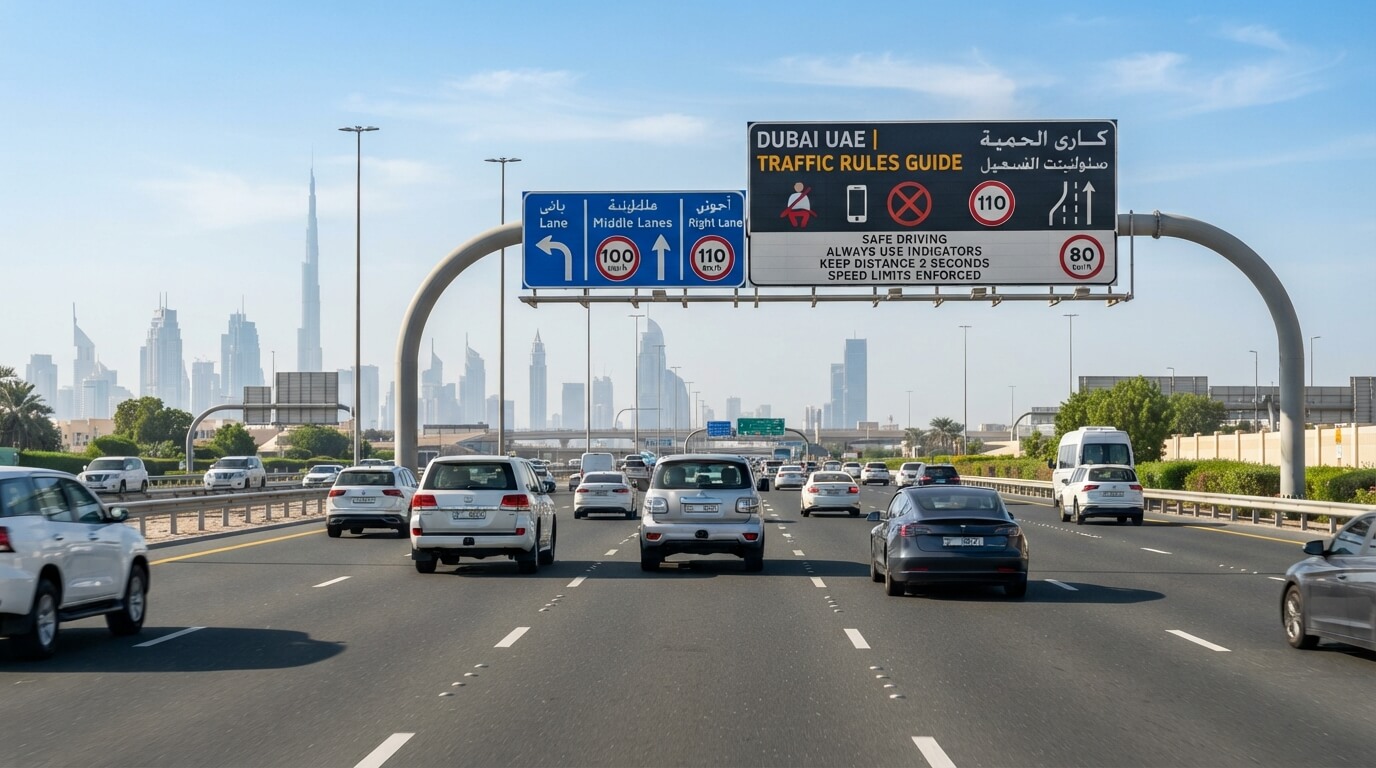
guide-to-uae-traffic-rules
29 Jul 2026

Complete Guide to UAE Traffic Rules Every New Driver Must Know

Learning UAE traffic rules is one of the most important steps for every new driver before getting behind the wheel. Whether you are a resident, an expatriate, or a first-time driver in the country, understanding road regulations helps you drive safely, avoid fines, and build confidence on UAE roads.

The UAE has a well-organised road system with strict traffic laws designed to protect drivers, passengers, pedestrians, and other road users. New drivers must understand speed limits, lane discipline, parking regulations, traffic signs, and safe driving practices to become responsible motorists.

This complete guide explains the essential UAE traffic rules every new driver should know before driving on the roads.

Why Is It Important to Understand UAE Traffic Rules?

Traffic rules are not only legal requirements but also essential safety guidelines. Following them helps reduce accidents and creates a smoother driving experience for everyone.

Understanding UAE traffic regulations helps new drivers:

  • Avoid traffic fines and penalties.
  • Reduce the risk of accidents.
  • Drive confidently in different road conditions.
  • Understand the expectations of other road users.
  • Maintain a good driving record.

The UAE uses advanced traffic monitoring systems, including cameras and automated enforcement technology, making it important for drivers to follow rules at all times.

Always Carry a Valid Driving Licence and Vehicle Documents

Every driver in the UAE must carry a valid driving licence while operating a vehicle.

You should also ensure that the vehicle has:

  • Valid vehicle registration (Mulkiya).
  • Valid insurance coverage.
  • Required safety equipment.

Driving without proper documents can result in penalties and legal issues.

New drivers should also remember that driving with an expired licence or using a vehicle without valid registration is a serious traffic violation.

Follow Speed Limits at All Times

Speed limits are among the most important UAE traffic rules.

Speed restrictions vary depending on the location and type of road, including:

  • Residential areas.
  • School zones.
  • City roads.
  • Highways.
  • Service roads.

Always check speed limit signs and adjust your speed according to road conditions.

Driving above the legal limit can lead to:

  • Heavy fines.
  • Black points on your driving record.
  • Vehicle impoundment in serious cases.

Remember that driving within the speed limit is not only about avoiding fines but also about protecting yourself and others.

Understand Lane Discipline Rules

Proper lane discipline is a key part of safe driving in the UAE.

Drivers should:

  • Stay within their lane.
  • Avoid sudden lane changes.
  • Use indicators before changing direction.
  • Check mirrors and blind spots before moving.
  • Keep to the appropriate lane based on speed and road conditions.

On highways, slower vehicles should generally remain in the right lanes, while overtaking should be done safely from the appropriate side according to UAE regulations.

Changing lanes without checking or cutting in front of other vehicles can result in penalties.

Always Use Indicators Correctly

Indicators communicate your intentions to other drivers.

You must use indicators before:

  • Changing lanes.
  • Turning left or right.
  • Entering or exiting roundabouts.
  • Parking.
  • Leaving a parking space.

Using indicators too late or failing to use them can create dangerous situations and may result in traffic violations.


Maintain a Safe Following Distance

Keeping a safe distance between vehicles is essential for preventing collisions.

Avoid driving too closely behind another vehicle, especially at high speeds.

Increase your following distance during:

  • Rainy weather.
  • Fog.
  • Heavy traffic.
  • Night driving.

A safe distance gives you enough time to react if the vehicle ahead suddenly brakes or changes direction.

Follow Traffic Signals and Road Signs

Traffic lights and road signs must always be obeyed.

Important signs include:

  • Stop signs.
  • Give Way signs.
  • No Entry signs.
  • Speed limit signs.
  • Pedestrian crossing signs.
  • Lane direction signs.

Ignoring traffic signals can result in serious penalties and increases the risk of accidents.

Always slow down when approaching intersections and check for pedestrians and other vehicles.

Rules for Roundabouts in the UAE

Roundabouts are common throughout UAE cities, and many new drivers find them challenging.

Follow these basic rules:

  • Slow down before entering the roundabout.
  • Give priority to vehicles already inside when required.
  • Choose the correct lane before entering.
  • Use indicators when exiting.
  • Check mirrors before changing lanes.

Entering a roundabout without proper observation or failing to give way can lead to dangerous situations.

Pedestrian Safety Rules

Protecting pedestrians is a major priority in UAE traffic laws.

Drivers must:

  • Stop at pedestrian crossings when required.
  • Reduce speed near schools and residential areas.
  • Give pedestrians enough space.
  • Avoid parking on pedestrian pathways.

Failing to give way to pedestrians can result in penalties and creates serious safety risks.

Mobile Phone Use While Driving

Using a mobile phone while driving is a common but dangerous violation.

Drivers should avoid:

  • Texting while driving.
  • Holding a phone during vehicle movement.
  • Checking notifications while driving.

If you need to make a call, use approved hands-free systems or safely stop the vehicle.

Distracted driving reduces reaction time and increases accident risk.

Seat Belt Rules in the UAE

Wearing seat belts is mandatory for drivers and passengers.

Drivers are responsible for ensuring:

  • The driver wears a seat belt.
  • Front passengers wear seat belts.
  • Children are properly secured using appropriate child safety seats.

Seat belts significantly reduce the risk of serious injuries during accidents.

Rules for Overtaking Safely

Overtaking should always be done carefully and legally.

Before overtaking:

  • Check mirrors.
  • Check blind spots.
  • Use indicators.
  • Ensure enough space.
  • Maintain a safe speed.

Avoid overtaking near:

  • Pedestrian crossings.
  • Sharp turns.
  • Dangerous road areas.
  • Areas with limited visibility.

Unsafe overtaking is one of the major causes of road accidents.

Parking Rules Every Driver Should Know

Parking regulations are strictly enforced in UAE cities.

Drivers should:

  • Park only in permitted areas.
  • Pay parking fees where required.
  • Avoid blocking entrances or emergency areas.
  • Avoid parking in spaces reserved for people of determination without permission.

Illegal parking can result in fines and vehicle towing.

Driving During Rain and Poor Weather Conditions

Although the UAE has mostly dry weather, rain and fog can create challenging driving conditions.

During bad weather:

  • Reduce your speed.
  • Increase your following distance.
  • Turn on lights when necessary.
  • Avoid sudden braking.
  • Stay focused on the road.

Driving carefully during poor weather helps prevent accidents.

UAE Traffic Fines and Penalties

The UAE has strict penalties for traffic violations to encourage safe driving.

Common violations include:

  • Speeding.
  • Using a mobile phone while driving.
  • Running red lights.
  • Dangerous driving.
  • Not wearing seat belts.
  • Unsafe lane changes.

Penalties may include:

  • Fines.
  • Black points.
  • Vehicle impoundment.
  • Driving licence suspension for serious offences.

Following traffic rules is the best way to avoid penalties.

Defensive Driving Tips for New Drivers

New drivers should develop defensive driving habits from the beginning.

Important tips include:

  • Always stay alert.
  • Expect mistakes from other drivers.
  • Avoid aggressive driving.
  • Keep calm in traffic.
  • Maintain proper vehicle control.
  • Plan your route before driving.

Defensive driving helps you respond safely to unexpected situations.

Common Mistakes New Drivers Should Avoid

Many new drivers make mistakes that can be easily prevented.

Avoid:

  • Driving while distracted.
  • Changing lanes suddenly.
  • Ignoring blind spot checks.
  • Following vehicles too closely.
  • Speeding to match other drivers.
  • Failing to use indicators.
  • Driving when tired.

Building good habits early makes you a safer and more confident driver.

Frequently Asked Questions

What is the most important UAE traffic rule for new drivers?

The most important rule is to always prioritise safety by following speed limits, maintaining lane discipline, and respecting other road users.

Can tourists drive in the UAE?

Visitors may drive using an international driving permit or an accepted foreign licence, depending on their nationality and circumstances.

What happens if a driver breaks UAE traffic laws?

Depending on the violation, drivers may receive fines, black points, vehicle penalties, or other legal consequences.

Is using a phone while driving illegal in the UAE?

Yes. Using a mobile phone while driving without an approved hands-free system is prohibited.

Are seat belts mandatory in the UAE?

Yes. Drivers and passengers must wear seat belts while travelling in a vehicle.

Final Thoughts

Understanding UAE traffic rules is essential for every new driver who wants to drive safely and confidently. From following speed limits and respecting traffic signals to maintaining proper lane discipline and practising defensive driving, every rule plays an important role in creating safer roads.

The best drivers are not only those who know the rules but also those who apply them consistently. By developing responsible driving habits from the beginning, new drivers can enjoy a safer driving experience and contribute to a better road environment across the UAE.